


Lily In Flux
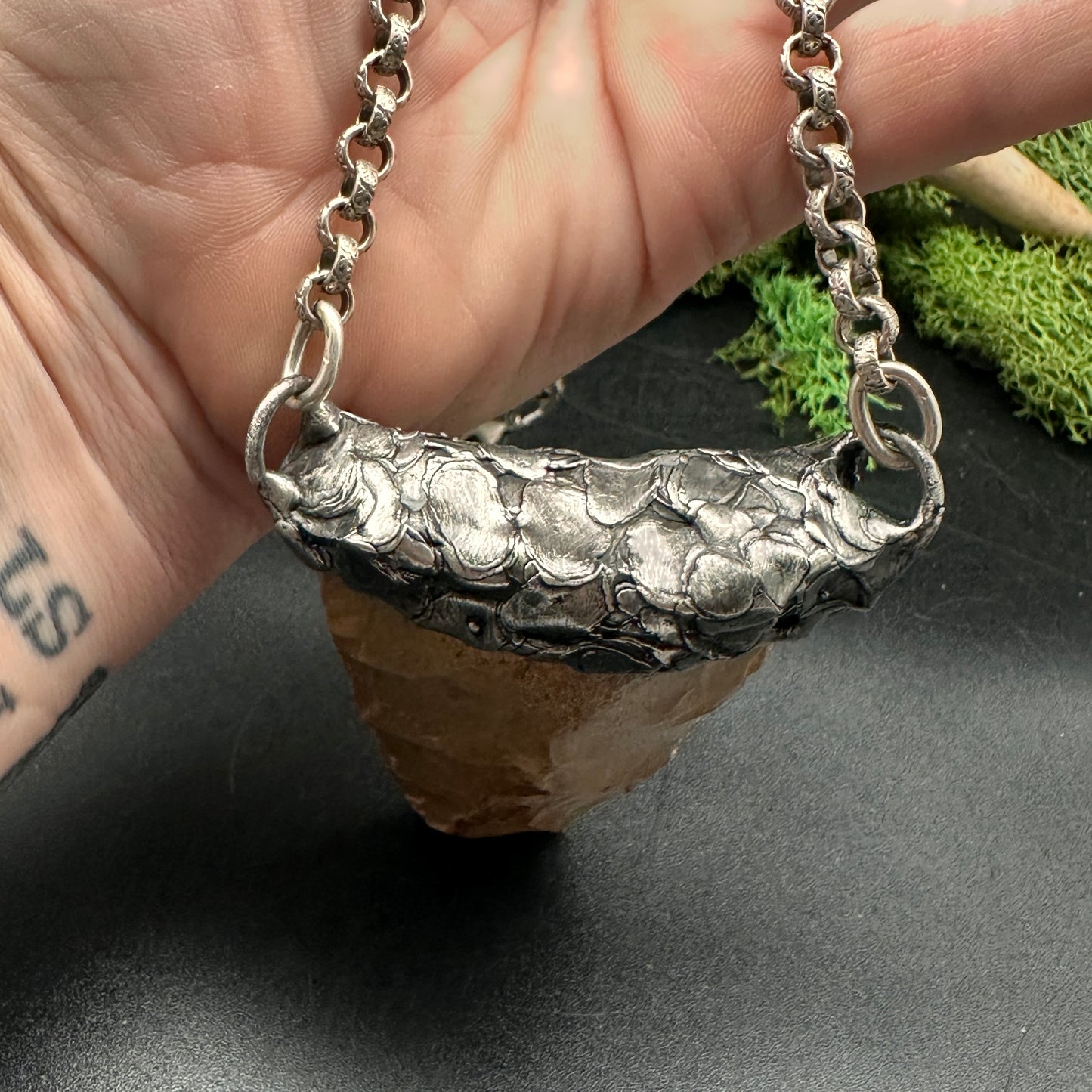
Impact ~ Stone Age Hand Axe
Couldn't load pickup availability
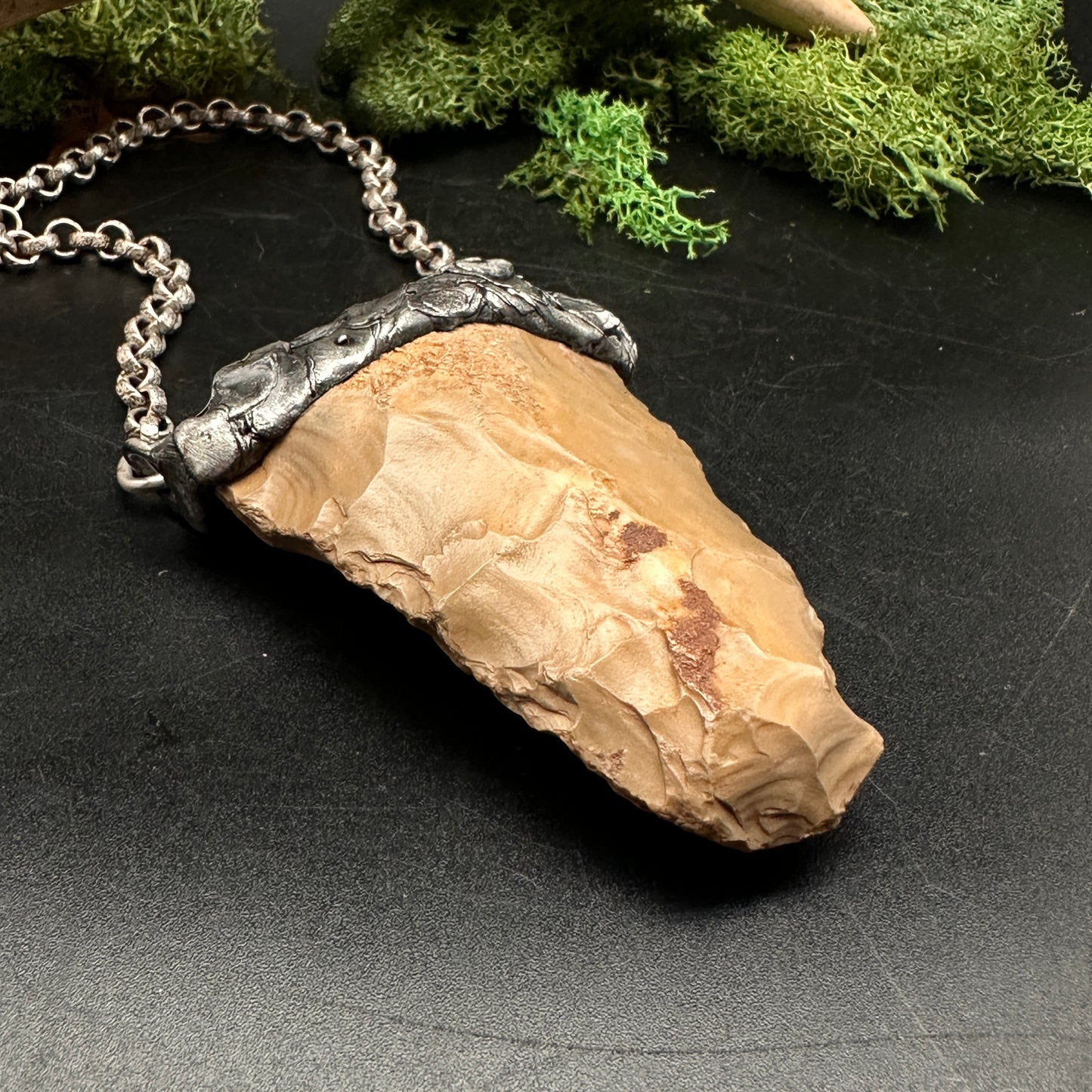
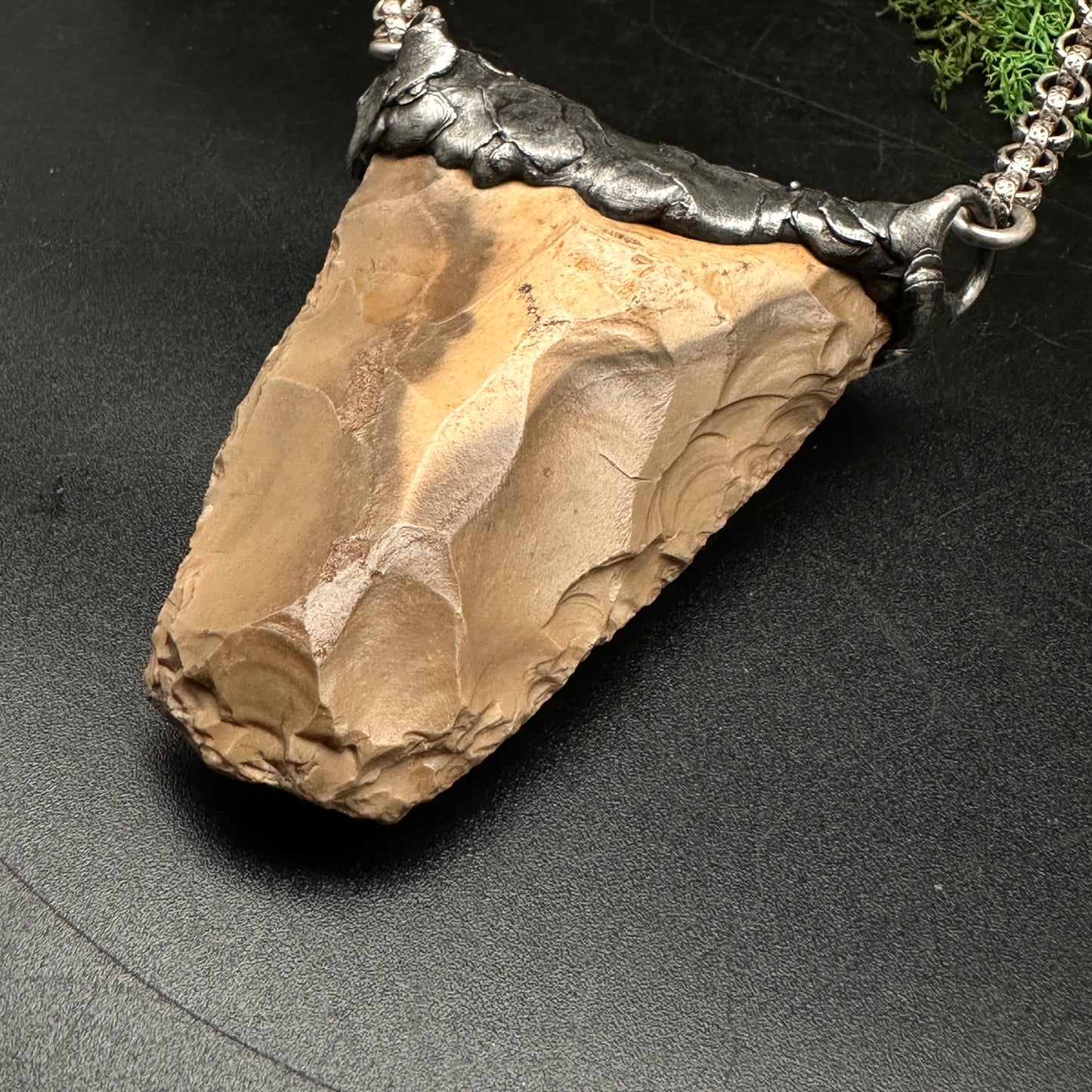
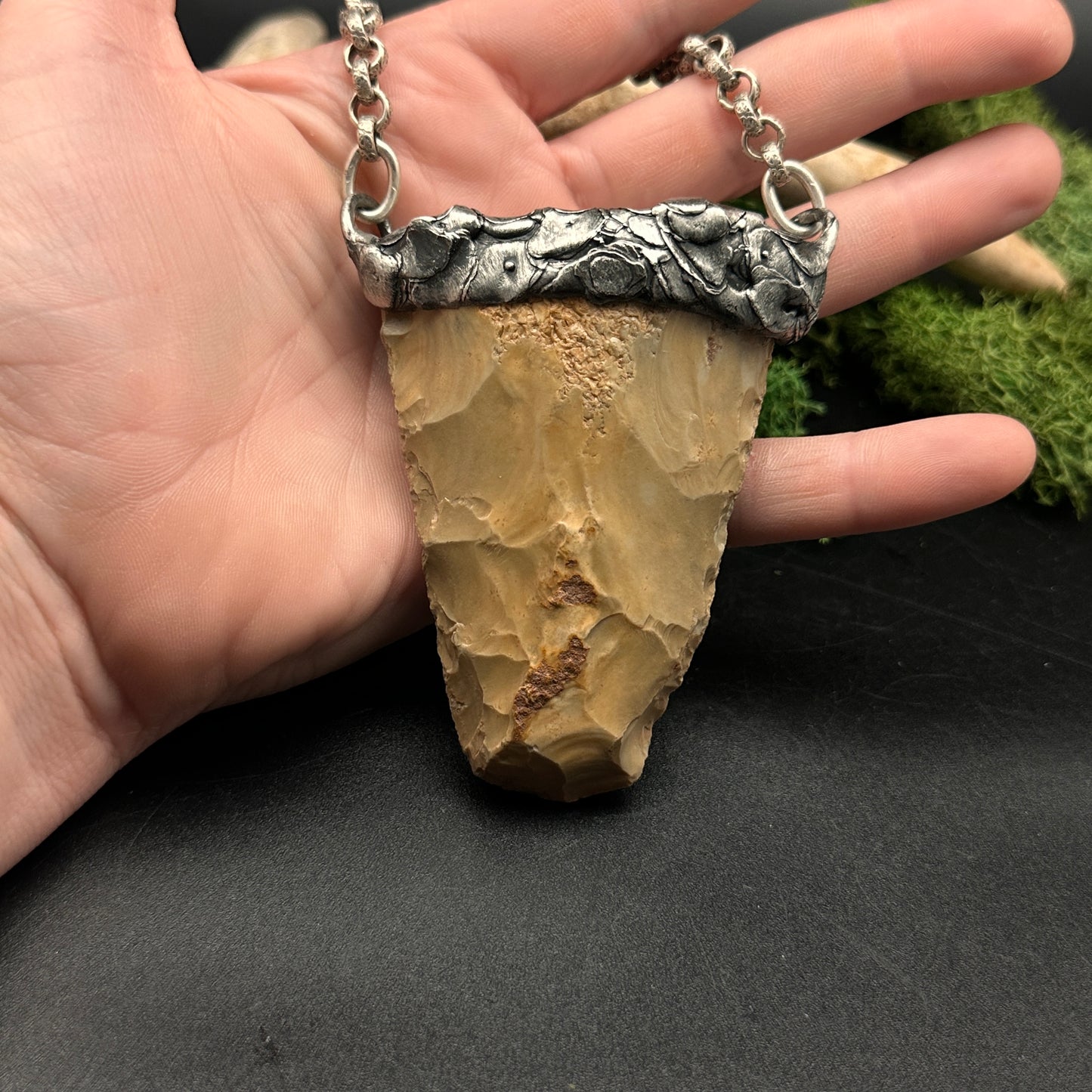
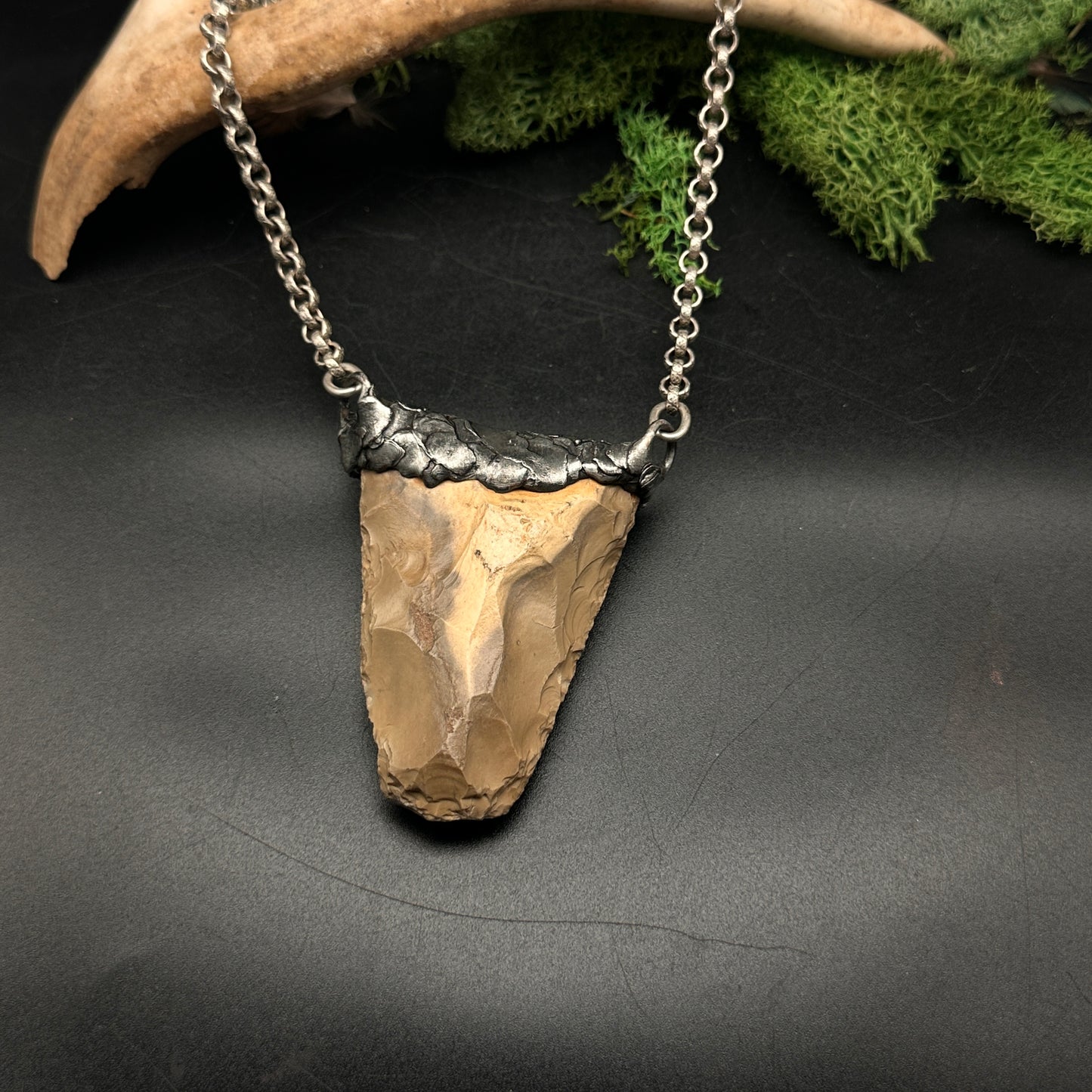
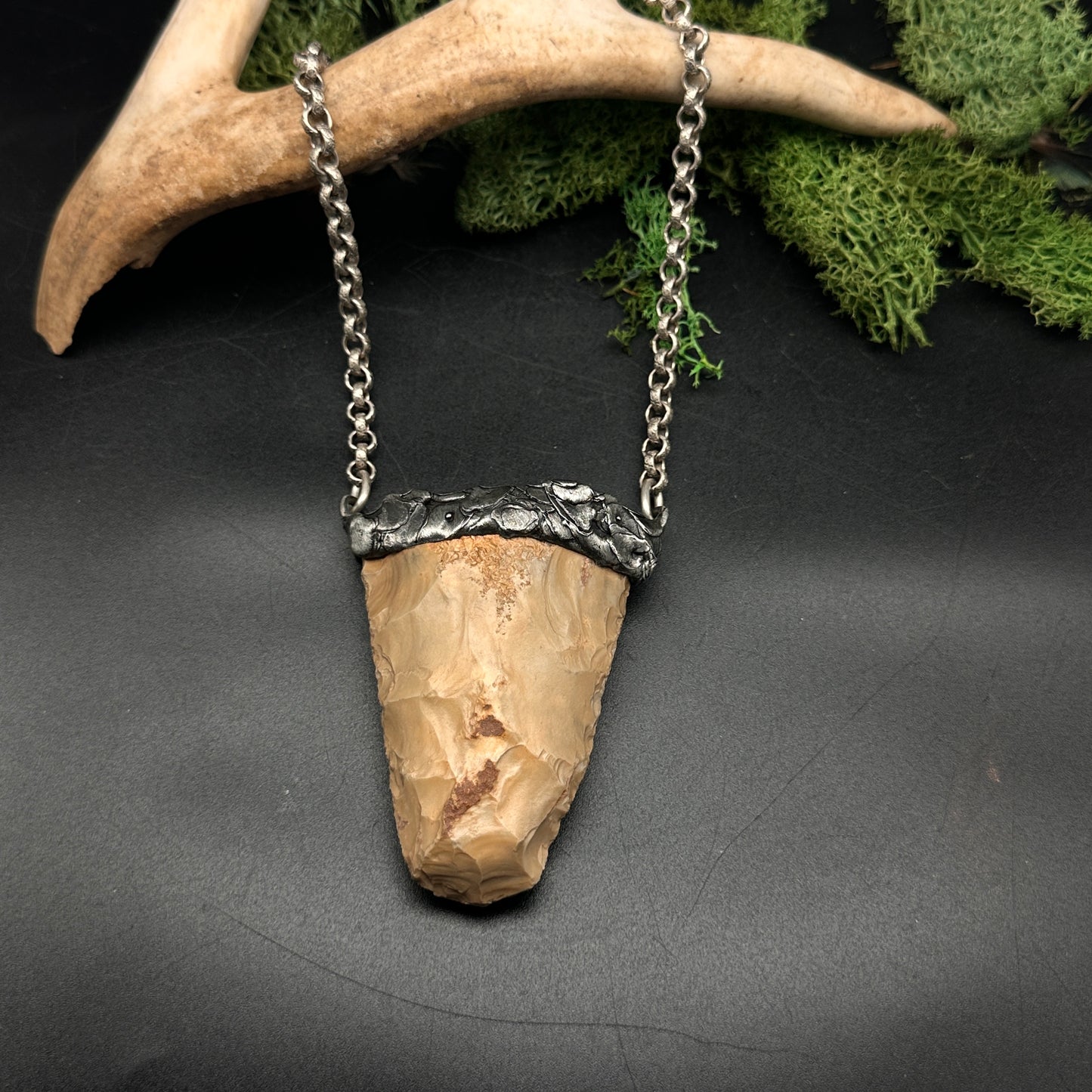
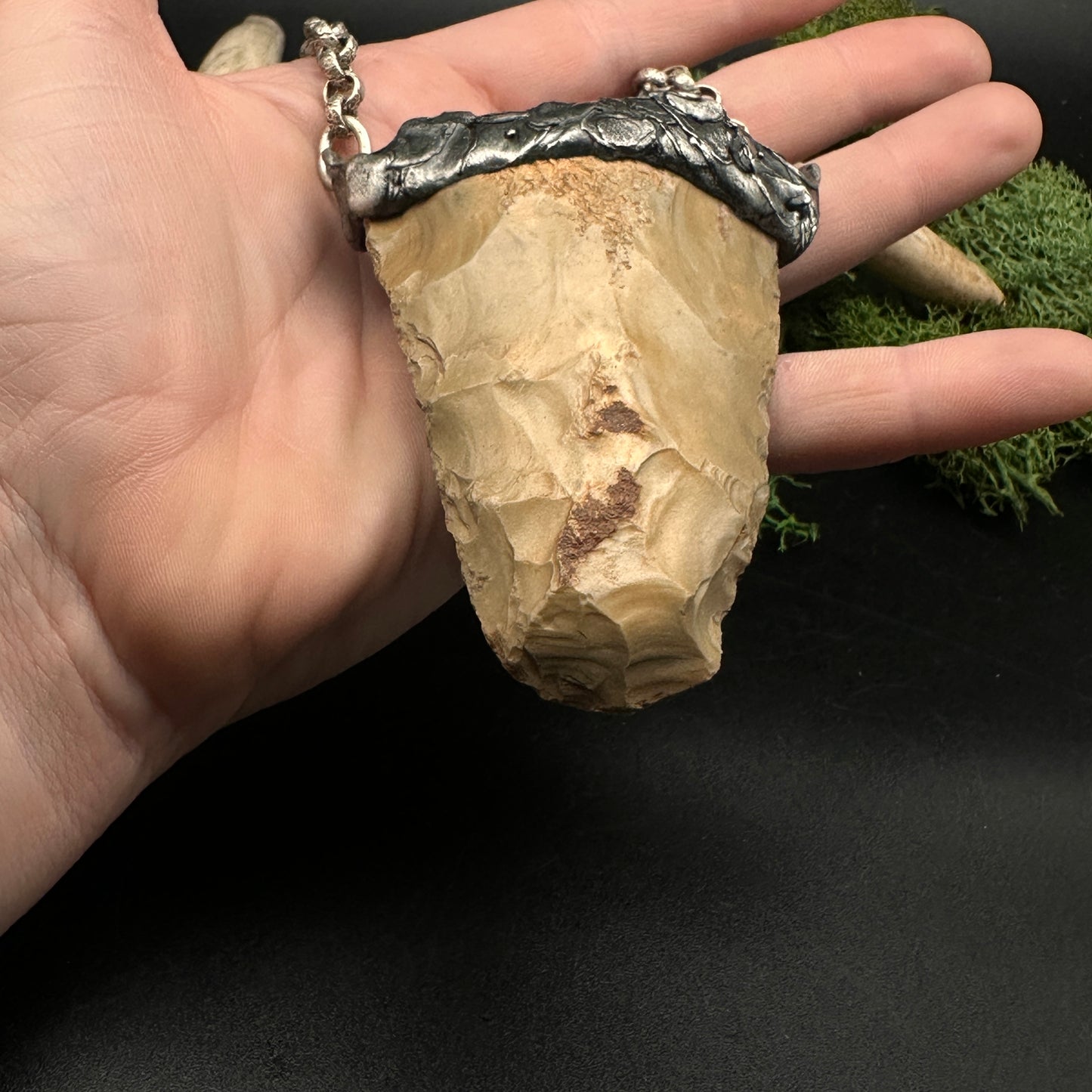
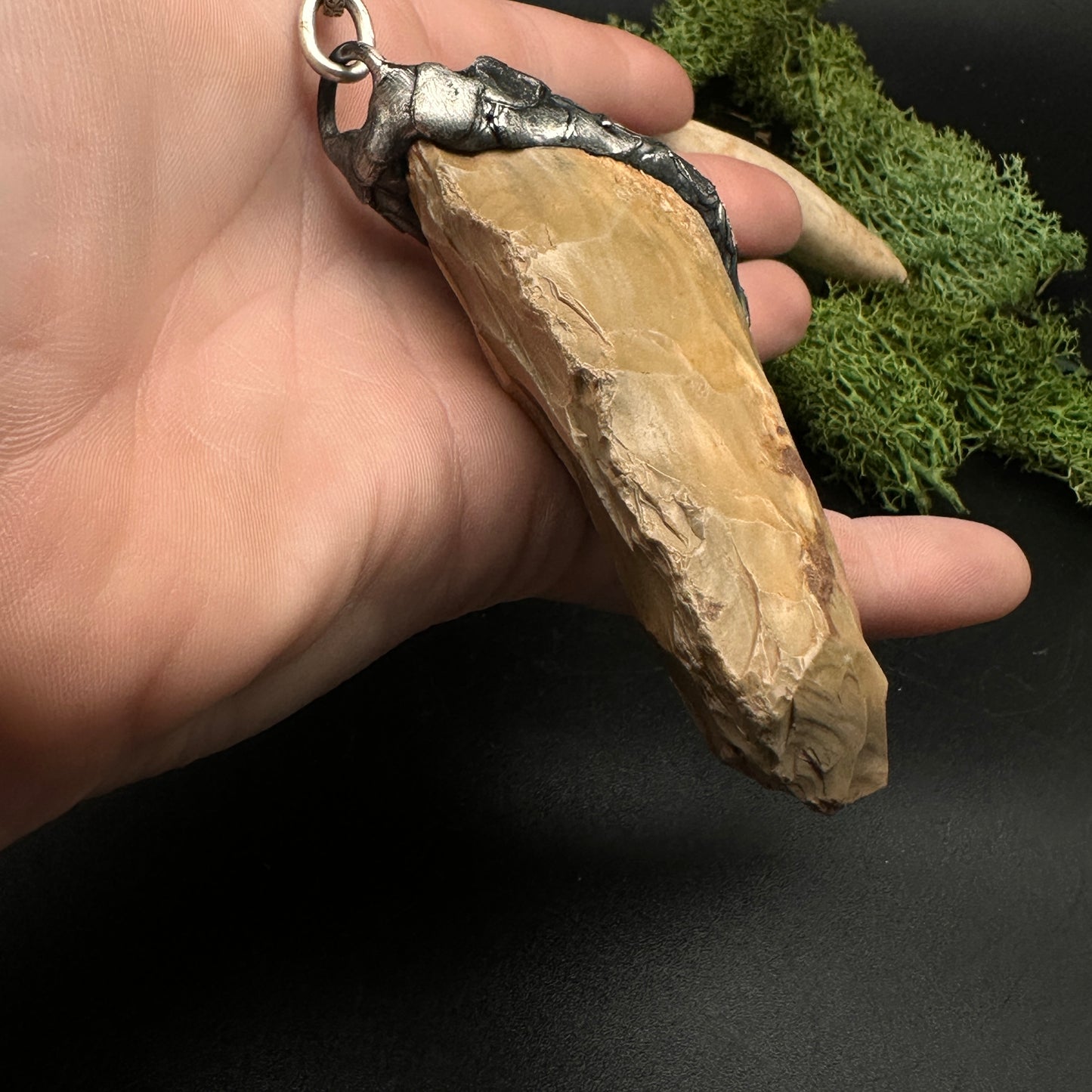
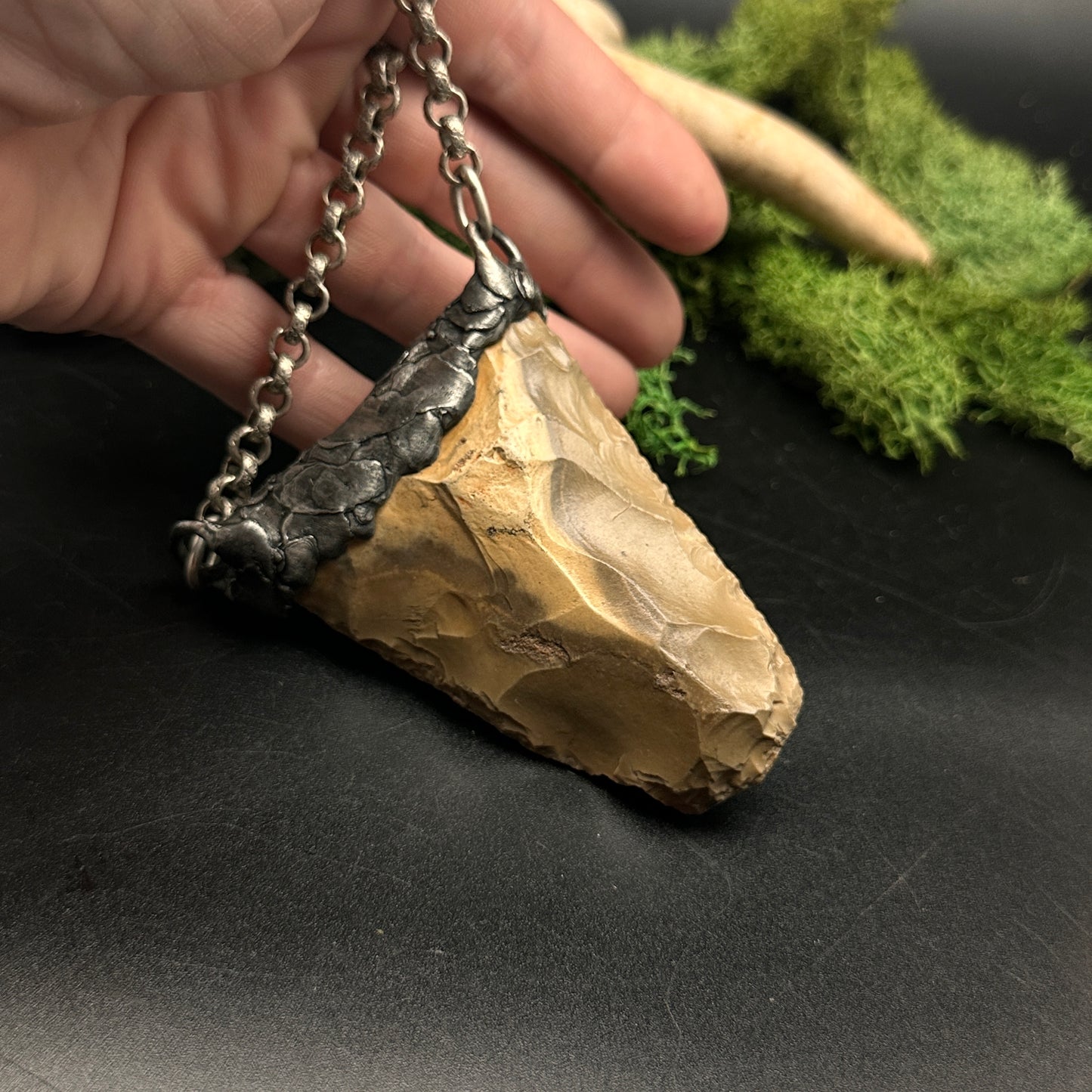
History preserved. This ancient stone tool, likely a hand axe from the Paleolithic or Stone Age period, originates from North Africa, a region where many such tools have been discovered.
The tool is a biface, meaning it was worked on both sides to create a cutting edge. Similar hand axes found in North Africa and the Sahara Desert have been dated to the Middle Stone Age, which spans approximately 280,000 to 50,000 years ago. Other discoveries in Morocco date back even further, to 1.3 million years ago. Made of flint or chert, a common material for prehistoric tools due to its ability to be flaked into sharp edges.
Choose your chain length at checkout. Don’t forget to add an extension if you want even more ways to wear it!
Materials
Materials
Pieces can include: natural stones, minerals, crystals, porcelain, brass, copper, silver, jewelry solder, various metals in chain and findings, love, magic, life.
General Care Instructions
General Care Instructions
In general, you can wear most all of these pieces every day. Casual water exposure is totally okay and shouldn't harm any piece. Just keep your jewelry away from salt water and chlorine pools/spas.
If your silver pieces tarnish or fade, you can brighten them up with a silver polishing cloth or a green brillo pad.
Fragility: Fossils, stones, crystals, are natural and made of all sorts of materials....so some can be more fragile than others, like some fossils or thin crystals. Just use common sense if you're like, rollerskating or jumping on a trampoline.
FAQ Copper Jewelry
FAQ Copper Jewelry
Why does copper turn your skin green? Copper is considered healing and has been used for so long in human history that people have learned to live with green skin...which is kinda strange, right?
Actually, it’s totally normal and it is not harmful to your health. Copper reacts naturally with our salty skin, which can be created whenever we sweat. Copper is an element found naturally in the earth. When it is exposed to air, it darkens or tarnishes, forming what is commonly referred to as copper “patina.” After prolonged contact with human skin where it can interact with air, sweat and other chemicals, such as
soaps, lotions and makeup, copper can turn green or bluish-green, and stain the skin in the process. The reaction varies according to an individual’s body chemistry, both in how long it takes for the green discoloration to form and in how pronounced the color becomes. Some people experience no discoloration. The discoloration, incidentally, is not harmful to one’s health, and is readily washed off with soap and water. If not washed off, it is normally absorbed by the body overnight.
-
Free shipping on orders over $65